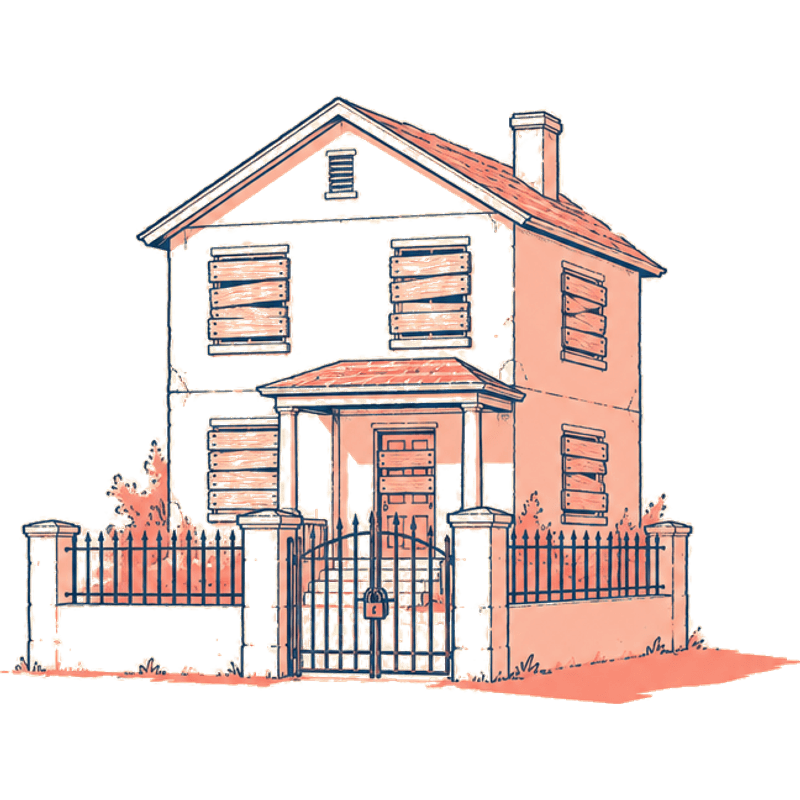
Vacant Property insurance. You make one call, We make the rest.
A building with nobody in it, a lender who wants proof the day the tenant left, and a policy that may have quietly stopped covering it. We know this work, we know which insurers want vacant buildings, and the paperwork goes out the same day.
Tell us about your business.
What is Vacant Property insurance?
Coverage for a building that nobody occupies. Property coverage protects the structure against fire, weather, and the vandalism and theft that empty buildings attract, written without the vacancy exclusions of a standard policy. Liability coverage responds to the trespasser or the contractor hurt on the site. Builders risk takes over when the building is under renovation. Lenders require continuous coverage regardless of occupancy, and municipalities sometimes require proof when they register a vacant building.
-
The building
Property coverage for fire, wind, water, and weather damage, written for a building nobody is in to notice it.
-
Vandalism and theft
Malicious damage, graffiti, break-ins, and stolen copper and fixtures, which standard policies remove from a vacant building.
-
Liability
The trespasser, the neighbor, or the contractor hurt on the site, with legal defense included.
-
Renovation
Builders risk for a building being rehabbed, where the exposure changes week to week.
Who needs Vacant Property insurance?
-
Owners between tenants
A commercial or residential building waiting for the next lease.
-
Investors and flippers
A property bought to renovate and sell.
-
Estates and inherited property
A house that is empty while the family decides.
-
Buildings awaiting sale or demolition
Listed, under contract, or scheduled to come down.
-
Lenders and receivers
Holding a property after a foreclosure.
A standard policy stops covering a building after it sits empty.
Most commercial property policies cut back or remove coverage once a building has been vacant for a stated number of days, usually sixty, and vandalism and water damage are the first things to go. A vacant property policy is written for the empty building, and we place it before the clock runs out.
Why businesses like yours choose Harper.
-
We know what the vacant property underwriter asks
Whether the utilities are on, whether the building is boarded and alarmed, how often it is checked, and how long it has been empty decide who will write it and at what price. We answer those correctly first.
-
The insurers that want empty buildings
Most standard insurers will not write a vacant building. We compare the specialty markets most brokers cannot reach, side by side, so you see real options.
-
Proof for the lender the same day
When the lender asks for evidence of coverage after a tenant leaves, the certificate goes out the day you ask, with the lender named as mortgagee.
-
Room to grow
When the tenant moves in or the renovation finishes, the policy converts to occupied coverage instead of restarting.
Frequently asked questions
Why will my regular policy not cover a vacant building?
Most property policies restrict coverage after a building has been empty for a stated period, usually sixty days, because an empty building is more likely to burn, freeze, or be broken into. A vacant property policy is written without that restriction.
Does it cover vandalism?
Yes, when the building is secured as the policy requires, usually locked, boarded where needed, and checked regularly. Leaving it open can affect the claim.
Does it cover frozen pipes?
Usually only if the heat is maintained or the water is shut off and drained, as the policy specifies. We tell you which the insurer wants before you bind.
How long can a building stay on a vacant policy?
Most are written for a year and renewed as long as the building stays empty. Buildings vacant for several years are harder to place, and we will tell you where you stand.
Can my lender be named on the policy?
Yes. We add the lender as mortgagee and send the certificate the same day, which is usually what satisfies the loan covenant.
What does it cost?
The building's value, its condition and construction, how it is secured, and how long it has been empty drive the price. We take one application to every insurer that writes vacant buildings, so the number already has competition in it.