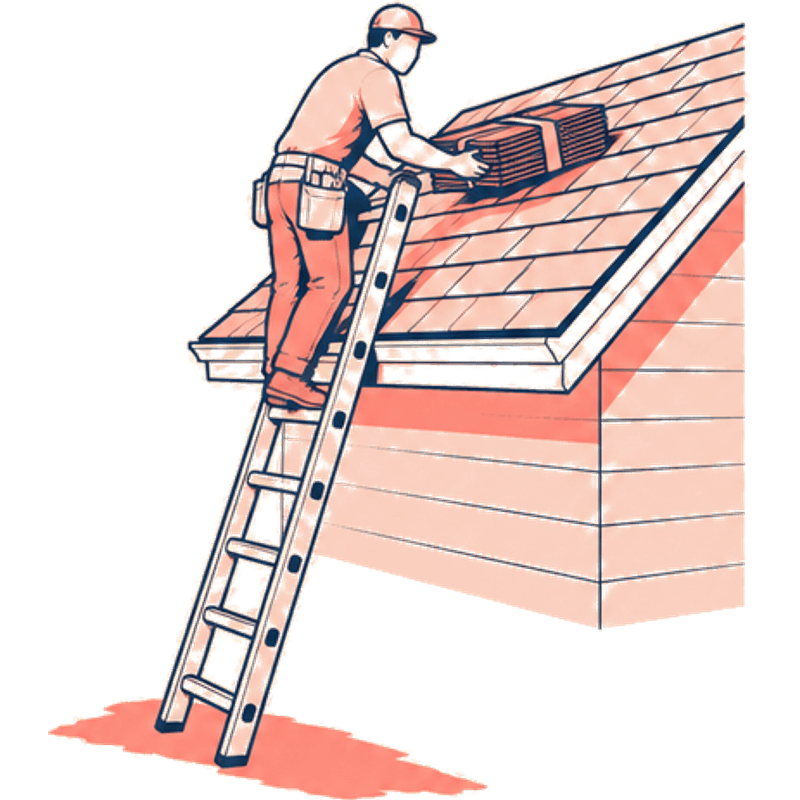
Roofing insurance. You make one call, We make the rest.
A crew on a roof, a dumpster in the driveway, and a general contractor who wants a certificate before you can start. Roofing is a hard trade to place, and we know the insurers who write it.
Tell us about your business.
What is Roofing insurance?
Coverage for a business that works at height on the most expensive part of someone's house. General liability covers the damage your work causes and the person hurt below the roof, with legal defense included. Inland marine covers the tools, the equipment, and the materials on site and in the truck. Commercial auto covers the truck and the trailer, and workers' compensation covers a crew in one of the highest-rated classes there is. General contractors, builders, and most homeowners' insurers will ask for proof before you are allowed on the roof.
-
Damage and injury on the job
General liability for the water that gets in before the roof is dry, the gutter you crush, and the person hurt by a dropped tool.
-
Tools, equipment, and materials
Inland marine for the nail guns, the lifts, and the shingles on the ground, on the job and in the truck.
-
The truck and trailer
Commercial auto for the vehicles your business runs on, because a personal policy will usually not pay once it is hauling a crew.
-
Workers' compensation
Medical costs and lost wages when someone on your crew falls or is hurt, written in the roofing class your state requires.
Who needs Roofing insurance?
-
Residential roofing contractors
Re-roofs and repairs on occupied homes.
-
Commercial and flat roof contractors
TPO, EPDM, and built-up roofing on commercial buildings.
-
Storm restoration roofers
Hail and wind repair work, often insurance-paid and on a deadline.
-
Roof repair and maintenance services
Leak repair, gutters, and ongoing maintenance contracts.
-
Roofing subcontractors
Crews working under a general contractor's requirements.
Torch work and height decide who will write you.
Most standard insurers decline roofing on the application, and the ones that write it ask two things first: how many stories you work and whether you use a torch or hot asphalt. Tell us both, and whether you use subcontractors, and we take the application to the insurers that say yes.
Why businesses like yours choose Harper.
-
We know the trade
Residential re-roofs, commercial flat roofs, and storm repair are rated differently, and stories, torch work, and subcontractor use decide the quote. We ask the right questions first.
-
Certificates the same day
Your general contractor should never wait on paperwork. We send the certificate the day you ask, with every additional insured and the wording the contract requires.
-
The specialty insurers that write roofers
Most standard insurers decline this trade. We take your application to the specialty insurers that write roofing and compare what comes back side by side.
-
Room to grow
A second crew, a commercial contract, a new truck, or your first employee extends your coverage instead of restarting it.
Frequently asked questions
Is roofing insurance required?
Most general contractors and commercial clients will not let you on the job without it, many states require liability coverage for a roofing license, and workers' comp is required almost everywhere once you have a crew.
Do I need workers' comp if my crew are subcontractors?
In most states, yes, unless each sub carries their own and gives you a certificate proving it. An insurer will audit this at renewal, so we set it up correctly from the start.
Does the policy cover water damage after I open a roof?
Yes. Rain that gets in before the roof is dried in is the most common roofing claim, and general liability covers the damage to the home below, with legal defense included.
Can you match the exact requirements my GC sent?
Yes. Forward the requirement as written and we place coverage to meet it, limits and wording included, and send the certificate the same day.
What does it cost?
Stories, torch or hot work, residential versus commercial, your payroll, and your subcontractor use drive the price. We take one application to every insurer that writes roofing, so the number you see already has competition in it.