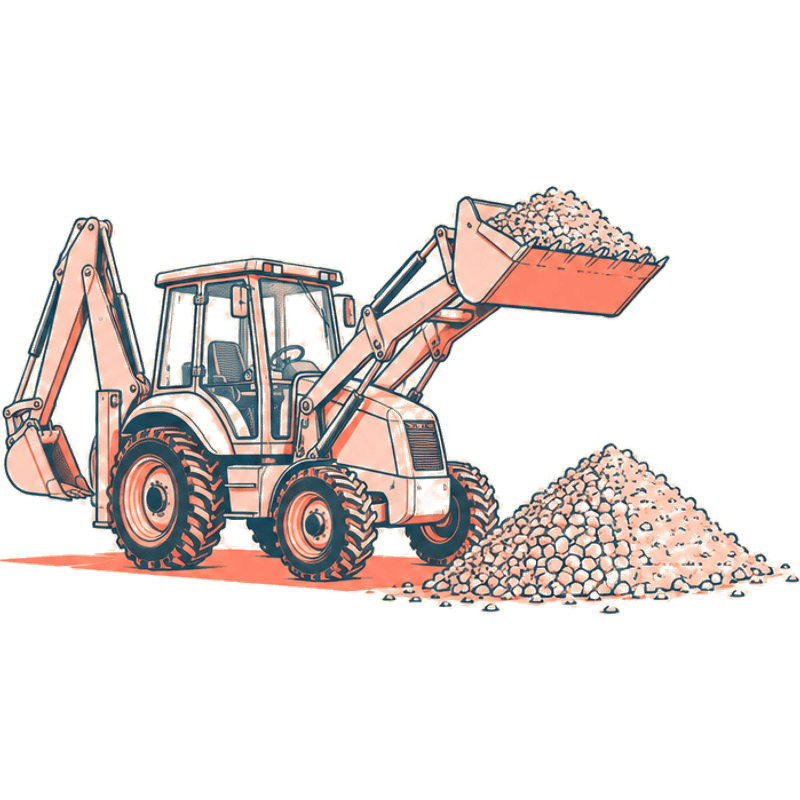
Machine Operator insurance. You make one call, We make the rest.
An excavator on a lowboy, a crane beside someone else's building, and a general contractor who wants a certificate before the first lift. We know this work and which insurers want it, and the certificate goes out the same day.
Tell us about your business.
What is Machine Operator insurance?
Coverage for a business whose machines can do more damage in a minute than most businesses do in a year. General liability covers the gas line you hit and the wall you clip, with legal defense included. Contractors' equipment coverage covers the excavator, the loader, and the crane itself, owned or rented. Commercial auto covers the trucks and trailers that move them, and workers' compensation covers the operators and ground crew. General contractors, developers, and equipment rental companies will usually ask for proof before you are allowed on site.
-
Damage and injury on the jobsite
General liability for the struck utility, the undermined foundation, and the person hurt near the machine, including riggers liability for the load on the hook.
-
The machines
Contractors' equipment coverage for owned, leased, and rented machinery against rollover, collision, theft, and fire, on the job and in the yard.
-
The trucks and trailers
Commercial auto for the lowboy, the service truck, and the pickups that move the crew and the equipment.
-
Workers' compensation
Medical costs and lost wages when an operator or a ground worker is hurt, rated for the heavy equipment class your state uses.
Who needs Machine Operator insurance?
-
Excavation and grading contractors
Site prep, trenching, and earthmoving with owned equipment.
-
Crane and rigging services
Mobile cranes and crews lifting on other contractors' sites.
-
Equipment operators for hire
Owner-operators who bring the machine and run it for a general contractor.
-
Demolition contractors
Structural and selective demolition with heavy machinery.
-
Utility and pipeline contractors
Directional drilling, trenching, and underground work.
Cranes, depth, and demolition decide the quote.
An insurer asks an operator what the machine does before it asks what it is worth, because crane work, deep excavation, and demolition are each priced separately and some standard policies exclude them. Tell us the jobs you actually take and we place you with an insurer that covers how you work.
Why businesses like yours choose Harper.
-
We know the trade
A grading contractor, a crane service, and a demolition crew are three different risks, and operator certifications, excavation depth, and underground work decide the quote. We ask the right questions first.
-
Certificates before you are on site
General contractors will not let a machine through the gate without one. We send the certificate the same day, with every additional insured and the wording the subcontract requires.
-
Every insurer that writes heavy equipment
Standard insurers and the specialty markets that write cranes and demolition, compared side by side on one application.
-
Room to grow
A second machine, a bigger crane, a new operator, or a rented excavator for one job extends your coverage instead of restarting it.
Frequently asked questions
Is insurance required to operate on a jobsite?
Yes, in practice. General contractors and project owners require liability coverage and additional insured endorsements before any machine is allowed on site, and equipment rental companies require proof before they release a rental.
Does the policy cover rented equipment?
Yes, when rented equipment coverage is included, which we make sure it is. The rental company's damage waiver is usually more expensive than insuring the rental yourself.
Does it cover the load on my crane's hook?
Only with riggers liability, which is not part of standard general liability. Tell us if you lift other people's property and we add it.
Can you name the general contractor on my certificate?
Yes. Subcontracts almost always require it, and we add the general contractor and the owner and send the certificate the same day.
What does it cost?
The machines you own, the work you do, your payroll, your radius, and your claims history drive the price. We take one application to every insurer that writes heavy equipment, so the number you see already has competition in it.