Dance Studios insurance. You make one call, We make the rest.
Sprung floors, a recital at a borrowed theater, and forty students whose parents trust you with them. We know this business, we know which insurers write studios, and the certificate for your landlord or venue goes out the same day.
Tell us about your business.
What is Dance Studios insurance?
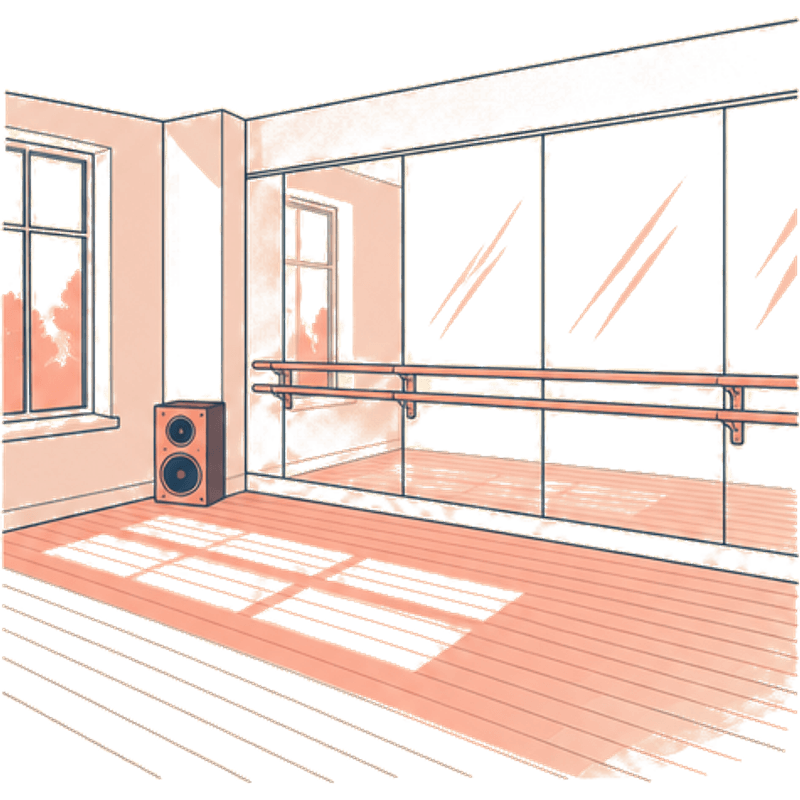
Coverage for a business built on bodies in motion and parents in the lobby. General liability covers the sprained ankle in class and the parent who slips on the stairs. Abuse and molestation coverage responds to allegations involving a student, including the legal defense, which most studios teaching children are expected to carry. Property coverage protects the floors, mirrors, barres, and sound system you paid to install. Landlords, recital venues, and competitions will ask for proof before you sign or perform.
-
Student and visitor injuries
A fall in class, a collision in rehearsal, or a parent hurt in the lobby, with legal defense included.
-
Abuse and molestation
Allegations of misconduct involving a student, including defense costs, written into the policy rather than excluded from it.
-
The studio build-out
Sprung floors, mirrors, barres, lighting, sound, and costumes, against fire, water, and theft.
-
Teaching and choreography
Professional liability for claims that instruction or a routine caused a student harm.
Who needs Dance Studios insurance?
-
Dance schools and academies
Ballet, tap, jazz, and hip hop classes for children and adults.
-
Competition and performance studios
Teams that travel and perform under a venue's insurance requirements.
-
Aerial, acro, and pole studios
Apparatus work that insurers rate on its own.
-
Adult movement and fitness studios
Barre, Zumba, and social dance with no minors in the room.
-
Pre-professional conservatories
Intensives and auditions with students far from home.
Teaching children is the first question.
An insurer will ask whether you teach minors, how you screen instructors, and whether an adult is ever alone with a student, because abuse and molestation coverage is excluded from many standard policies. Answer honestly and we place you with an insurer that includes it, with limits your landlord and competition venues will accept.
Why businesses like yours choose Harper.
-
We know how studios are rated
Recreational classes, a competition team, and an adult pole or aerial class are rated differently. We ask what you teach and to whom before the application goes out.
-
Certificates for landlords and venues
The recital theater and the competition both want to be named. Send us their requirement and the certificate goes out the same day.
-
The insurers that want studios
Standard insurers and the specialty markets that write dance and fitness, compared side by side.
-
Room to grow
A second room, a summer intensive, or your first employee extends your policy instead of restarting it.
Frequently asked questions
Does the policy cover a student hurt in class?
Yes. General liability responds to injuries in class, rehearsal, and performance when the activity is one the policy was written for. Tell us about aerial or acro work so nothing is excluded by surprise.
Do I need abuse and molestation coverage?
If you teach minors, in practice yes. Most landlords, venues, and parents expect it, and a claim without it is uninsured. We place it with the general liability so it is one policy, not an afterthought.
What does it cost?
Your enrollment, the ages you teach, the styles you offer, and your payroll drive the price. We take one application to every insurer that writes studios, so the number you see already has competition in it.
The recital venue wants a certificate. How fast?
The same day, with the venue named as additional insured for the dates of the show.
Are costumes and props covered when we travel to a competition?
Inland marine coverage follows them off the premises, subject to the policy's terms. Tell us roughly what they are worth and we set the limit.
Do I need workers' compensation for instructors who work a few hours a week?
In most states, yes, once they are employees rather than independent contractors. Tell us how you pay your instructors and we will place it correctly.