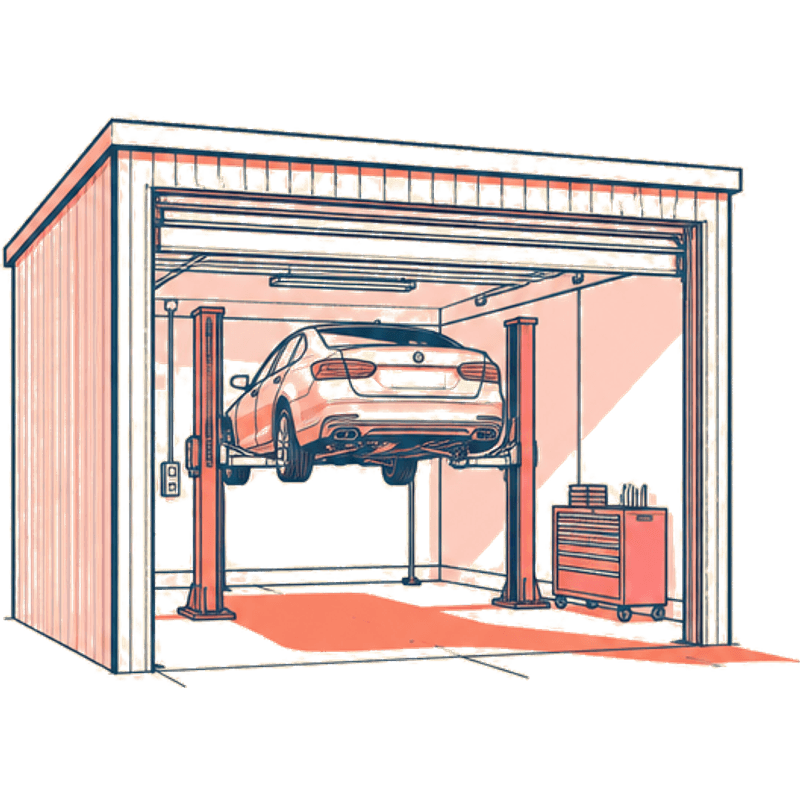
Auto Repair Shops insurance. You make one call, We make the rest.
Customer cars on the lot overnight, a technician on a test drive, and a landlord who wants a certificate before the first oil change. We know how a shop runs, we know which insurers want it, and the paperwork goes out the same day.
Tell us about your business.
What is Auto Repair Shops insurance?
Coverage for a business that is responsible for other people's vehicles from drop-off to pickup. Garage liability covers the injury on the premises, the test-drive accident, and the brake job that fails after the car leaves. Garagekeepers covers the customer's car while it sits in your bay or on your lot. Property coverage protects the lifts, compressors, and diagnostic equipment, and workers' compensation covers your technicians. Landlords, fleet accounts, and your state license will usually ask for proof before you open the doors.
-
Garage liability
Customer injuries on the premises, test-drive accidents, and the claims that follow your work out the door, with legal defense included.
-
Garagekeepers
The customer's car while it is in your care, against fire, theft, vandalism, weather, and collision on your lot or in your bay.
-
Lifts, tools, and equipment
The lifts, compressors, scanners, and hand tools that make the shop work, against theft, fire, and damage.
-
Workers' compensation
Medical costs and lost wages when a technician is hurt, required in most states from your first hire.
Who needs Auto Repair Shops insurance?
-
Independent repair shops
General repair from oil changes to engine rebuilds.
-
Specialty shops
Transmission, brake, exhaust, and tire shops.
-
Auto body and collision shops
Storing and repairing damaged vehicles, often for weeks at a time.
-
Quick lube and maintenance centers
High volume means many cars in your care every day.
-
Detailers and car washes
Customer cars on the premises, with or without a bay.
-
Mobile mechanics
Working at the customer's driveway or job site, with the van as the shop.
General liability stops at the customer's keys.
A standard general liability policy excludes driving a customer's car and damage to property in your care, which is most of what a shop does all day. Garage liability and garagekeepers are the policies written for that work, and we make sure both are on the file.
Why businesses like yours choose Harper.
-
We know how a shop is rated
Insurers ask about the number of bays, whether you do bodywork or paint, how many customer cars sit overnight, and who drives them. We answer those correctly the first time so the quote holds.
-
The insurers that want repair shops
Standard companies and the specialty markets most brokers cannot reach, compared side by side, including for body shops and shops with a paint booth.
-
Certificates the same day
Your landlord, your fleet account, and your state license should never wait on paperwork.
-
Room to grow
A second bay, a tow truck, a used-car lot, or your first employee extends the policy instead of restarting it.
Frequently asked questions
What is the difference between garage liability and general liability?
General liability covers premises risks but excludes garage operations: driving customer vehicles, having their property in your care, and test-drive accidents. Garage liability is written for exactly those situations.
Does garagekeepers cover damage I cause while repairing the car?
Garagekeepers covers the customer's car against fire, theft, vandalism, and collision while it is in your care. Damage caused by your own faulty work is usually a garage liability matter, and we structure the two so there is no gap between them.
How much garagekeepers coverage do I need?
Enough for the most valuable cars you usually have on the lot at once, not the average car. A shop with a few trucks or luxury vehicles overnight needs a higher limit, and we size it to what you actually hold.
I only do oil changes. Do I still need this?
Yes. You still have customers on the premises, cars in your care, and work that can lead to a claim. A high-volume shop usually has more exposure, not less.
Can my landlord be named on the certificate?
Yes. Most shop leases require the landlord as an additional insured, and the certificate goes out the same day with that wording.
What does it cost?
Your payroll, your sales, the number of bays, and whether you do bodywork drive the price. We take one application to every insurer that writes repair shops, so the number already has competition in it.